What Is OASDI? The 6.2% Tax on Your Paycheck Explained

If you've ever looked at your paycheck and wondered what "OASDI" or "Fed OASDI/EE" means, you're not alone. OASDI stands for Old-Age, Survivors and Disability Insurance, better known as Social Security tax, and it's a mandatory 6.2% deduction from your paycheck that funds your future retirement, disability, and survivor benefits.
In 2026, you'll pay this tax on earnings up to $184,500, with a maximum annual contribution of $11,439.00.
2026 OASDI Tax Limits and Rates - What You Need to Know
Current 2026 Numbers:
- Maximum Taxable Earnings: $184,500 (increased from $176,100 in 2025)
- Employee Tax Rate: 6.2%
- Employer Tax Rate: 6.2% (matches your contribution)
- Maximum Annual OASDI Tax: $11,439.00
- Self-Employed Rate: 12.4% (you pay both employee and employer portions)
What Changed from 2025?
The Social Security wage base increased by $8,400 from last year. This means if you're a high earner, you'll pay up to $520.80 more in OASDI tax in 2026 compared to 2025.
Historical OASDI Limits (Last 5 Years)
| Year | Wage Base Limit | Maximum Tax per Person | Change from Prior Year |
|---|---|---|---|
| 2026 | $184,500 | $11,439.00 | +$520.80 |
| 2025 | $176,100 | $10,918.20 | +$465.00 |
| 2024 | $168,600 | $10,453.20 | +$527.00 |
| 2023 | $160,200 | $9,932.40 | +$818.00 |
| 2022 | $147,000 | $9,114.00 | +$595.00 |
The wage base limit adjusts annually based on national average wage growth.
What is OASDI Tax?
OASDI stands for Old-Age, Survivors and Disability Insurance. This is the official name for Social Security tax - one of the most important deductions on your paycheck.
When you see "OASDI" or "Social Security tax" on your pay stub, it represents your mandatory contribution to the federal Social Security program. This program provides:
Old-Age Benefits: Monthly retirement income when you reach retirement age (currently 67 for most workers)
Survivors Benefits: Financial support for your spouse, children, or dependent parents if you pass away
Disability Insurance: Income replacement if you become disabled and cannot work
Every time you get paid, 6.2% of your gross wages (up to the annual limit) is automatically withheld and sent to the Social Security Administration. Your employer matches this by paying an additional 6.2%, for a total of 12.4% going into the Social Security system.
What Does "Fed OASDI/EE" Mean on My Paycheck Stub?
If you see "Fed OASDI/EE" on your pay stub, here's what each part means:
- Fed = Federal tax (collected by the federal government)
- OASDI = Old-Age, Survivors and Disability Insurance (Social Security)
- /EE = Employee portion (the part YOU pay)
The "/EE" distinguishes YOUR 6.2% contribution from your employer's matching 6.2% contribution (/ER), which doesn't appear on your paycheck because your employer pays it directly.
Real Example: Understanding Your Pay Stub
If you earn $1,000 per paycheck:
- Fed OASDI/EE (your contribution): $62.00
- Fed OASDI/ER (employer pays, not shown on your stub): $62.00
- Total going to Social Security: $124.00
Only the employee portion (Fed OASDI/EE) reduces your take-home pay. The employer portion is an additional cost your employer pays on top of your salary.
Is OASDI Federal Tax?
Yes, OASDI is a federal payroll tax, but it's important to understand that OASDI is separate from federal income tax.
OASDI vs Federal Income Tax: Key Differences
OASDI (Social Security Tax):
- Flat rate: 6.2% for everyone
- Only applies to first $184,500 of earnings (2026)
- Not refundable (except overpayments)
- Builds your future Social Security benefits
- Stops when you hit the wage cap
Federal Income Tax:
- Progressive rates: 10% to 37% depending on income bracket
- Applies to all income, no wage cap
- Refundable based on withholding and deductions
- Funds general government operations
- Continues on all earnings year-round
Both appear as separate line items on your pay stub.
How Much is the OASDI Tax?
The OASDI tax rate is 6.2% of your gross wages, but only up to the annual wage base limit.
2026 OASDI Tax Calculator
Formula: Your earnings (up to $184,500) × 6.2% = Your annual OASDI tax
Quick Examples:
Annual Salary: $50,000
- Calculation: $50,000 × 0.062 = $3,100
- Annual OASDI tax: $3,100
- Per paycheck (biweekly): $119.23
- Per paycheck (monthly): $258.33
Annual Salary: $200,000
- Calculation: Only $184,500 × 0.062 = $11,439.00
- Annual OASDI tax: $11,439.00 (maximum)
- Earnings above $184,500 are NOT subject to OASDI
- OASDI deductions will stop mid-year once you hit the cap
Self-Employed ($80,000 net profit):
- Calculation: $80,000 × 0.124 = $9,920
- Annual OASDI tax: $9,920
- You pay BOTH employee and employer portions (12.4% total)
- Reported on Schedule SE with your tax return
Is OASDI Tax Mandatory?
YES - OASDI tax is mandatory for nearly all U.S. workers. You cannot legally opt out of Social Security taxes if you're employed or self-employed.
Who MUST Pay OASDI Tax:
✓ All W-2 employees working for U.S. employers
✓ Self-employed individuals (sole proprietors, independent contractors)
✓ Government workers hired after 1984
✓ Employees of nonprofit organizations
✓ Most state and local government employees
✓ U.S. citizens working abroad for American companies
Very Rare Exemptions:
The ONLY people who can avoid OASDI tax are:
- Religious Groups: Members of recognized religious sects opposed to receiving Social Security benefits (must apply to IRS for exemption Form 4029)
- Foreign Government Employees: Some employees of foreign governments working in the U.S.
- Nonresident Aliens: Certain visa holders (F-1, J-1, M-1, Q-1) working temporarily in the U.S.
- Students Working at Their School: Students employed by the same school where they're enrolled and regularly attending classes
Important: You CANNOT simply choose to opt out because you don't want to pay or don't believe in Social Security. Refusing to pay OASDI tax is illegal and your employer is required to withhold it from your paycheck.
Do I Get My OASDI Tax Back? Understanding Returns and Refunds
No, OASDI is NOT refundable like income tax. It's an insurance program, not a traditional tax you get back.
Where Your OASDI Money Goes:
Your OASDI contributions:
- Build credits toward your future Social Security retirement benefits
- Pay current retirees' benefits (Social Security is a "pay-as-you-go" system)
- Fund disability insurance for workers who become disabled
- Provide survivor benefits for families who lose a wage earner
- Are tracked by the Social Security Administration under your Social Security number
Social Security is NOT a savings account. The money you pay today goes to pay benefits for current beneficiaries. When you retire, younger workers will fund YOUR benefits.
Exception: When You CAN Get a Refund
OASDI Overpayment Refund:
You CAN get a refund if you overpaid OASDI tax. This happens when:
Multiple Employers in One Year: If you work for two or more employers in the same year, each employer withholds OASDI separately. If the combined withholding exceeds the annual maximum, you get the excess back.
Example:
- Job 1 withheld: $11,439.00 (maximum)
- Job 2 withheld: $4,000
- Total withheld: $15,439.00
- Maximum allowed: $11,439.00
- Your refund: $4,000
Claim this refund on your tax return (Form 1040, Schedule 3, Line 11).
Employer Error: If your employer withheld too much due to a payroll error, contact your employer first for correction. If they can't fix it before year-end, claim it on your tax return.
When You GET Benefits Back:
While OASDI isn't refundable, you DO receive benefits eventually:
Retirement Benefits:
- Early retirement: Age 62 (reduced benefits, about 70% of full amount)
- Full retirement age: Age 67 for most workers born after 1960
- Delayed retirement: Wait until age 70 for maximum benefits (132% of full amount)
Disability Benefits:
- Available if you become disabled and can't work
- Must meet Social Security's definition of disability
- Typically 40% to 50% of your average lifetime earnings
Survivor Benefits:
- Your spouse, children, or dependent parents may receive benefits if you die
- Can be up to 75-100% of your benefit amount
- Helps replace lost family income
The Social Security Administration calculates your benefit based on your 35 highest-earning years. The more you paid in OASDI over your career, the higher your monthly benefit will be.
Is OASDI the Same as Social Security?
YES - OASDI and Social Security are exactly the same thing. They're just different names for the identical program and tax.
Why Two Different Names?
OASDI = Official government acronym used on tax forms and pay stubs Social Security = Common name most people use in everyday conversation
You Might See It Called:
- OASDI
- Social Security Tax
- FICA OASDI
- Fed OASDI/EE
- SS Tax
- Social Security Withholding
All of these refer to the same 6.2% tax that funds Social Security benefits.
OASDI vs Medicare vs FICA: What's the Difference?
FICA (Federal Insurance Contributions Act) is the umbrella tax that includes BOTH:
- OASDI (Social Security): 6.2% up to $184,500 wage base
- Medicare: 1.45% with NO wage limit
FICA Tax Breakdown:
| Component | Employee Rate | Employer Rate | 2026 Wage Cap | Total Tax |
|---|---|---|---|---|
| OASDI (Social Security) | 6.2% | 6.2% | $184,500 | 12.4% |
| Medicare | 1.45% | 1.45% | No limit | 2.9% |
| Total FICA | 7.65% | 7.65% | Varies | 15.3% |
Additional Medicare Tax: High earners pay an extra 0.9% Medicare tax on wages over $200,000 (single) or $250,000 (married filing jointly). There's no employer match on this additional tax.
On Your Pay Stub You'll See:
- Fed OASDI/EE = Social Security (6.2%)
- Fed Med/EE = Medicare (1.45%)
- Sometimes shown as combined "FICA tax"
What is OASDI Line on Paycheck?
The OASDI line on your paycheck shows your Social Security tax withholding for that pay period.
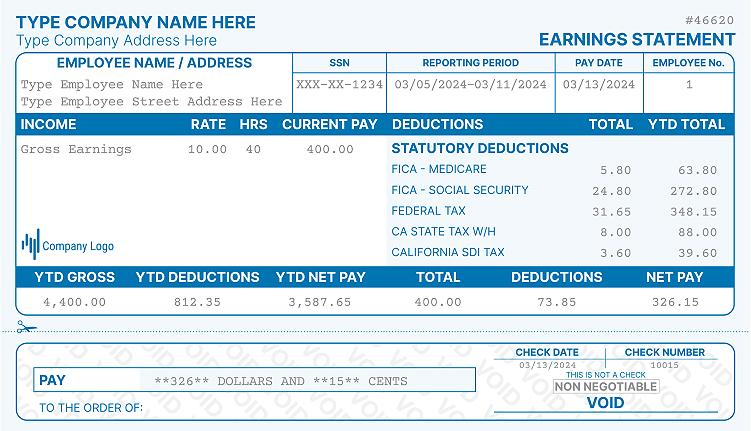
How to Read Your Pay Stub:
Sample Pay Stub Deductions:
Gross Pay: $3,000.00
Deductions: Fed Income Tax: -$320.00 Fed OASDI/EE: -$186.00 ← This is Social Security (6.2%) Fed Med/EE: -$43.50 ← This is Medicare (1.45%) State Tax: -$165.00 401(k): -$180.00
Net Pay: $2,105.50
What Each OASDI Entry Means:
Current Period: The OASDI withheld from THIS paycheck Year-to-Date (YTD): Total OASDI withheld so far this year
Example Mid-Year Pay Stub:
- OASDI Current: $186.00
- OASDI YTD: $4,650.00
The YTD number helps you track when you'll hit the $184,500 wage cap. Once your YTD wages reach $184,500, OASDI deductions stop for the rest of the year.
Why Your OASDI Amount Changes:
Your OASDI deduction might vary because:
✓ Your gross pay changed (overtime, bonus, commission) ✓ You reached the annual wage cap mid-year ✓ You changed jobs and the new employer has different pay periods ✓ Employer made a correction for under/over-withholding
OASDI is always calculated on gross wages BEFORE any pre-tax deductions like 401(k) or health insurance.
When Does OASDI Withholding Stop?
OASDI withholding stops when your year-to-date wages reach the annual limit of $184,500 for 2026.
When Will You Stop Paying OASDI in 2026?
It depends on your annual salary:
| Annual Salary | OASDI Stops Around | Months Paying OASDI |
|---|---|---|
| $80,000 | Never stops | All year |
| $120,000 | Never stops | All year |
| $184,500 | December (last paycheck) | All year |
| $200,000 | Early November | ~11 months |
| $250,000 | Early September | ~9 months |
| $300,000 | Mid-July | ~7 months |
| $400,000 | Late May | ~5 months |
| $500,000 | Late April | ~4 months |
Important Notes:
OASDI Stops, Medicare Doesn't: When you hit the OASDI cap, you'll see a nice bump in your take-home pay. However, Medicare tax (1.45%) continues on ALL earnings with no limit.
Cap Resets January 1: Even if you stopped paying OASDI in July, it starts again with your first paycheck of the new year.
Each Employer Tracks Separately: If you have multiple jobs simultaneously, EACH employer withholds OASDI independently. You can request a refund when filing your taxes if the combined total exceeds the maximum.
Bonuses Count: Your regular salary + bonuses + commissions all count toward the $184,500 limit.
Example: High Earner Reaching the Cap
Salary: $276,750 ($11,531.25 per paycheck, paid biweekly)
Paycheck #1-16 (January through mid-August):
- OASDI withheld: $714.94 per check
- Total OASDI so far: $11,439.04
Paycheck #17 (late August):
- Wages YTD: $195,531.25 (exceeded $184,500 cap)
- OASDI withheld: $0.00 ← STOPS HERE
- Extra take-home: $714.94
Paycheck #18-26 (September through December):
- OASDI withheld: $0.00
- Extra take-home per check: $714.94
- Medicare continues: Still paying 1.45% on all wages
Annual OASDI Paid: $11,439.00 (maximum, even though salary was much higher)
What If I Overpay My OASDI Taxes?
If you paid more than the maximum OASDI tax ($11,439.00 for 2026), you're entitled to a refund.
Common Overpayment Scenarios:
Scenario 1: Multiple Jobs You worked for two employers in 2026:
- Company A withheld: $11,439.00
- Company B withheld: $5,000
- Total withheld: $16,439.00
- Maximum allowed: $11,439.00
- Your refund: $5,000
Scenario 2: Job Change Mid-Year
- Old employer withheld: $8,000 (January-July)
- New employer withheld: $6,000 (August-December)
- Total withheld: $14,000
- Maximum allowed: $11,439.00
- Your refund: $2,561.00
Scenario 3: Employer Error Your employer's payroll system malfunctioned and withheld OASDI on wages over the cap:
- Should have withheld: $11,439.00
- Actually withheld: $13,000
- Your refund: $1,561.00
How to Get Your Refund:
Step 1: Check your W-2 in January Box 4 shows total Social Security tax withheld for the year
Step 2: File your tax return (Form 1040) Complete Schedule 3, Line 11 for "Excess Social Security tax withheld"
Step 3: IRS includes it in your tax refund The overpayment reduces your tax owed or increases your refund
Note: If you have only ONE employer who withheld too much, contact your employer FIRST before filing your taxes. They should correct the error and refund you directly. If they won't, claim it on your tax return.
Benefits of OASDI Tax
While paying OASDI tax reduces your paycheck now, it provides critical financial protection for you and your family.
What Your OASDI Contributions Buy:
- Guaranteed Retirement Income
- Monthly benefit for life starting at age 62-70
- Average monthly benefit in 2026: Approximately $2,050
- Maximum monthly benefit (full retirement age): Approximately $4,018
- Inflation-adjusted (COLA increases each year)
- Can't outlive your benefit - paid for life
- Disability Insurance
- Replaces income if you become disabled and can't work
- Average monthly benefit: Approximately $1,600
- Coverage starts after meeting work requirements
- No cost to buy private disability insurance
- Continues until retirement age or recovery
- Family Survivor Benefits
- Your spouse can receive up to 100% of your benefit
- Minor children receive benefits until age 18-19
- Dependent parents can receive benefits
- One-time death benefit of $255 to surviving spouse
- Acts as life insurance for your family
- Spouse Benefits
- Your spouse can collect up to 50% of YOUR benefit
- Even if they never worked or paid into Social Security
- Divorced spouses may qualify (if married 10+ years)
- Cost-of-Living Protection
- Benefits increase with inflation
- Recent COLA increases: 2.5% (2025), 3.2% (2024), 8.7% (2023)
- Protects purchasing power in retirement
OASDI Tax History: When Did It Start?
Origin of Social Security and OASDI Tax:
August 14, 1935: President Franklin D. Roosevelt signed the Social Security Act during the Great Depression
1937: First OASDI taxes collected (called "payroll taxes")
January 1940: First monthly Social Security benefit paid ($22.54 to Ida May Fuller)
Original Purpose: Provide modest retirement income to elderly Americans who lost savings in the Depression
How OASDI Tax Rates Have Changed:
| Year Period | Employee Rate | Wage Base Limit | Why It Changed |
|---|---|---|---|
| 1937-1949 | 1.0% | $3,000 | Original rate |
| 1950-1953 | 1.5% | $3,600 | Added disability benefits |
| 1960-1961 | 3.0% | $4,800 | Expanded coverage |
| 1970-1971 | 4.2% | $7,800 | Benefit increases |
| 1980-1981 | 5.08% | $29,700 | Inflation adjustments |
| 1990-2025 | 6.2% | Varies | Current rate (stable since 1990) |
| 2026 | 6.2% | $184,500 | Wage base increased |
The 6.2% rate has remained constant since 1990, but the wage base limit increases almost every year based on average wage growth.
Frequently Asked Questions about OASDI(FAQs)
Is OASDI the same as Social Security?
Yes, OASDI and Social Security are exactly the same. OASDI is the official acronym (Old-Age, Survivors and Disability Insurance), while "Social Security" is the common name everyone uses. When you see OASDI on your pay stub, it's your Social Security tax.
What is OASDI on my federal pay stub?
OASDI on your federal pay stub is your Social Security tax withholding. It's 6.2% of your gross wages up to $184,500 (2026 limit). This tax funds your future retirement, disability, and survivor benefits.
What does OASDI stand for on my pay stub?
OASDI stands for Old-Age, Survivors and Disability Insurance. These three words represent the three types of benefits Social Security provides: retirement (old-age), family (survivors), and disability benefits.
Why is OASDI taken out of my paycheck?
OASDI is taken out by federal law to fund the Social Security program. It's mandatory insurance that provides you retirement income, disability benefits if you can't work, and survivor benefits for your family. You cannot opt out.
Do I get OASDI tax back?
No, you don't get OASDI back as a tax refund. However, you DO receive benefits later when you retire (age 62+), become disabled, or your family receives survivor benefits if you pass away. The only time you get a refund is if you overpaid (for example, from having multiple employers).
Can I take OASDI off my paycheck?
No, you cannot remove OASDI from your paycheck or opt out. It's a mandatory federal program for all employees and self-employed individuals. The only exceptions are extremely rare religious exemptions.
Why did my OASDI deduction stop?
Your OASDI deduction stopped because you reached the annual wage base limit ($184,500 for 2026). Once your year-to-date earnings exceed this amount, no more OASDI tax is withheld for the rest of the year. It will resume in January.
Why did OASDI decrease on my paycheck?
OASDI decreased on your paycheck because either: (1) your gross wages decreased, (2) you reached the annual cap mid-pay period, or (3) your employer made a correction. OASDI is always 6.2% of your gross wages, so it varies with your pay.
When did OASDI tax start?
OASDI tax started in 1937, two years after President Roosevelt signed the Social Security Act in 1935. The original rate was 1% (compared to 6.2% today). First benefits were paid in January 1940.
Is OASDI part of my 401(k)?
No, OASDI is completely separate from your 401(k). OASDI is a mandatory government Social Security tax, while your 401(k) is a voluntary employer-sponsored retirement savings plan. They serve different purposes and have different rules.
What happens to my OASDI if I never collect Social Security?
If you die before collecting retirement benefits and have no eligible survivors, your OASDI contributions help fund current beneficiaries. Social Security is a "pay-as-you-go" system where current workers fund current retirees.
Does OASDI count toward my retirement?
Yes! Your OASDI contributions determine your future Social Security retirement benefits. The Social Security Administration tracks your earnings and calculates your benefit based on your 35 highest-earning years. The more you paid in, the higher your monthly benefit.
Will OASDI cover my retirement expenses?
OASDI (Social Security) is designed to replace about 40% of your pre-retirement income. Most financial experts recommend it should be just ONE part of retirement income, along with personal savings, 401(k), pensions, and other investments.
Is OASDI new?
No, OASDI is not new. It started in 1935 (90 years ago) and has been continuously operating since then. The name, structure, and benefits have evolved, but the core program has existed for nearly a century.
Is OASDI the same as FICA?
OASDI is PART of FICA, not the same thing. FICA (Federal Insurance Contributions Act) includes both OASDI (6.2%) and Medicare (1.45%), for a total of 7.65% in payroll taxes.
Can I opt out of OASDI if I have a 401(k)?
No. Having a 401(k) or any other retirement account does not exempt you from OASDI. Both are completely separate systems, and OASDI remains mandatory regardless of your other retirement savings.
Is OASDI tax higher for self-employed people?
Yes. Self-employed individuals pay 12.4% (both the employee and employer portions), compared to 6.2% for regular employees. However, you can deduct half of your self-employment tax when calculating income tax.
Will OASDI run out of money?
Current projections show the Social Security trust fund could be depleted around 2034-2035 if no changes are made. However, even then, incoming tax revenue would still cover about 75-80% of scheduled benefits. Congress has options to strengthen the program before then.
Need Help Reading Your Pay Stub?
If you need a pay stub for your records, loan applications, or to verify employment, check out our paystub generator tool to create accurate, professional pay stubs instantly.
Questions About Your OASDI?
Contact the Social Security Administration:
- Phone: 1-800-772-1213 (TTY 1-800-325-0778)
- Website: www.ssa.gov
- Create a "my Social Security" account to view your earnings record and benefit estimates
References:
- Social Security Administration. (2025). "Contribution and Benefit Base." Retrieved from https://www.ssa.gov/oact/cola/cbb.html
- Social Security Administration. (2025). "2026 Cost-of-Living Adjustment (COLA) Fact Sheet." Retrieved from https://www.ssa.gov/news/cola/
- Internal Revenue Service. (2025). "Topic No. 751 Social Security and Medicare Withholding Rates." Retrieved from https://www.irs.gov/taxtopics/tc751
- Social Security Administration. "Understanding the Benefits." Retrieved from https://www.ssa.gov/benefits/
- Internal Revenue Service. "Self-Employment Tax (Social Security and Medicare Taxes)." Retrieved from https://www.irs.gov/businesses/small-businesses-self-employed/self-employment-tax-social-security-and-medicare-taxes
- Social Security Administration. "Historical Background and Development of Social Security." Retrieved from https://www.ssa.gov/history/briefhistory3.html
- U.S. Department of Labor. "Federal Insurance Contributions Act (FICA)." Retrieved from https://www.dol.gov/

Kristen Larson is a payroll specialist with over 10 years of experience in the field. She received her Bachelor's degree in Business Administration from the University of Minnesota. Kristen has dedicated her career to helping organizations effectively manage their payroll processes with Real Check Stubs.
Our all Posts