Labor Cost Calculator | How to Calculate Your True Labor Costs

Labor cost is the total amount your business spends on employees, including gross wages, payroll taxes, benefits, and other employment-related expenses.
To calculate labor cost, add the gross wage to all additional annual costs, then divide by the actual hours worked. Get this number wrong and you risk underpricing your products, mismanaging payroll, or missing your profit targets entirely.
This guide walks you through the exact formula, a worked example using the latest tax rates, current industry benchmarks, and practical ways to reduce your labor costs without cutting wages. You're probably familiar with what labor costs and creating paystubs involve, but the full picture is often broader than expected.
Labor Cost: Meaning
Labor cost is the total amount paid to keep your employees working. It covers gross wages, payroll taxes, and any additional benefits your staff receives.
As a business owner, tracking your labor costs is essential. Compare them against your revenue regularly so you can spot margin problems early and stay profitable.
Determining Labor cost: Formula for Labor cost
Your labor cost per hour can be determined with this simple formula:
Labor cost per hour = (gross wage + total additional annual costs) / work hours per year
Labor costs cover every expense tied to employment. To get an accurate number, you have to identify all labor-related expenses, not just wages.
A Practical Example
To see how this works, we'll use James, a full-time hourly employee at Company ABC. The company has 40 employees. James earns $15 per hour and works 40 hours per week. Let's calculate his true labor cost.
Step 1: Calculate the Gross Pay
The first step is to determine the gross wage. Gross pay is the hourly rate multiplied by the total number of hours worked.
Gross pay = gross hourly rate x number of hours worked in the pay period
For James's annual gross pay:
- Gross hourly rate: $15
- Hours worked: 40 hours per week x 52 weeks
- Gross pay: 15 x 40 x 52 = $30,000
Step 2: Determine the Actual Hours Worked
The total available work hours in a year is 2,080. James is unlikely to have worked every single one. Let's assume he was absent for 10 days.
Hours not worked: 8 hours per day x 10 days = 80 hours.
Actual hours worked = total annual work hours minus hours not worked.
So James's actual hours worked are 2,080 hours minus 80 hours = 2,000 hours.
Step 3: Calculate All Annual Costs Per Worker
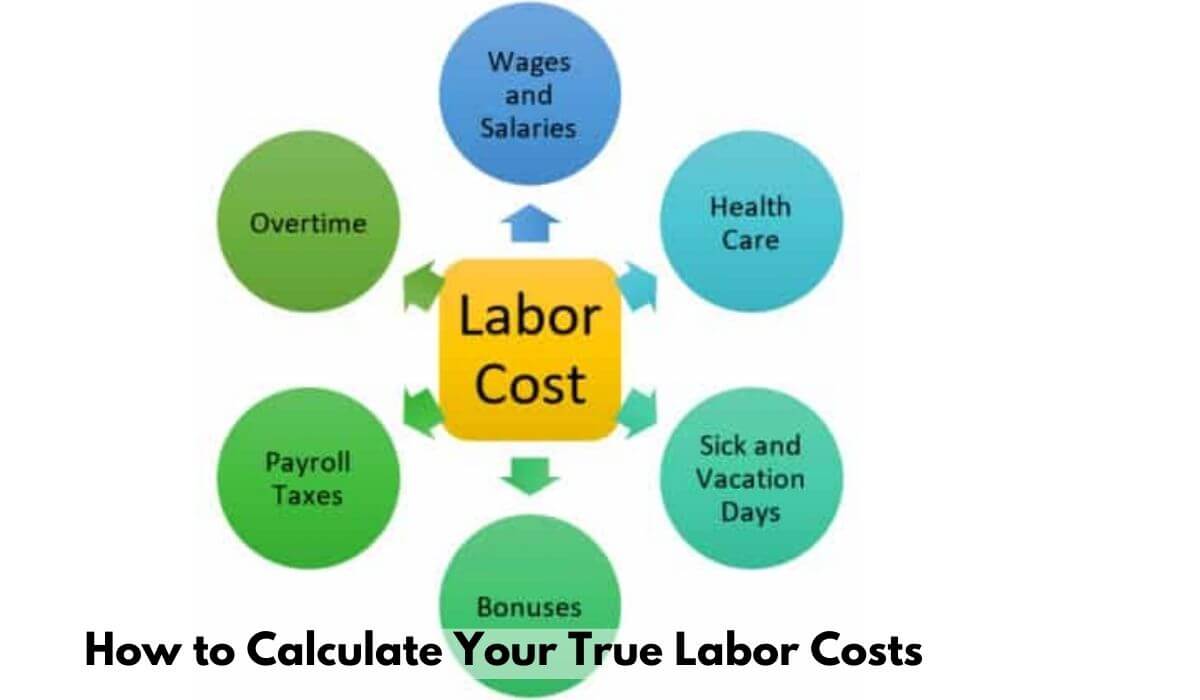
Now you need to add in everything else the company pays on James's behalf. Beyond gross wages, employees come with taxes, benefits, and other incentives. All of these must be accounted for to get an accurate labor cost.
Common additional labor costs include:
Payroll Taxes
- FICA taxes covering Social Security (6.2%) and Medicare (1.45%), with a 0.9% Additional Medicare surtax on wages above $200,000.
- State unemployment taxes (SUTA)
- FUTA taxes (6.0% on the first $7,000 in wages, reduced to 0.6% with the full state credit)
- Local unemployment or payroll taxes (where applicable)
Employee benefits
- Training
- Healthcare and insurance
- Employee meal plans
- Paid vacation days
- Sick days
- Public transportation stipends
Other potential costs
- Overtime pay
- Bonuses
- Work supplies and equipment
Here's a breakdown of James's annual additional labor costs based on the most updated rates:
| Cost Item | Annual Amount |
|---|---|
| Social Security (6.2%) | $1,860 |
| Medicare (1.45%) | $435 |
| FUTA (0.6% on first $7,000) | $42 |
| State unemployment tax | $240 |
| Health insurance | $3,450 |
| Other benefits | $1,330 |
| Overtime | $555 |
| Meals | $555 |
| Total additional costs | $8,467 |
So beyond gross pay, Company ABC spends an additional $8,467 per year to keep James on the team.
Note: If you have employees earning above $184,500 (the 2026 Social Security wage base), the 6.2% Social Security tax stops at that threshold. Medicare keeps applying with no cap.
Step 4: Calculate the Total Annual Payroll Expense
Now add the gross pay and the additional labor costs to get the full annual cost.
Annual payroll cost = Gross pay + additional annual costs
For James: $30,000 + $8,467 = $38,467. Company ABC spends $38,467 each year to employ him.
Step 5: Calculate the hourly labor cost
Finally, divide the total annual cost by the actual hours worked.
Hourly labor cost = annual total payroll cost / actual hours worked
For James: $38,467 / 2,000 hours = $19.23 per hour.
James's true labor cost is $19.23 per hour, not the $15 hourly rate on his paycheck. That's roughly a 28% premium over his base wage, which is typical for fully loaded labor costs.
Calculating Labor Cost Percentage
Beyond your total labor cost, you want to know how that cost relates to revenue. The labor cost percentage shows that relationship and tells you whether you're maximizing profit.
Labor cost percentage = (labor costs for all employees / total revenue) x 100
Once you have the number, analyze it against your industry's benchmark. The lower your labor cost percentage relative to your industry, the higher your profit margin.
Labor cost benchmarks by industry
| Industry | Typical Labor Cost % of Revenue |
|---|---|
| Retail | 10% to 20% |
| Manufacturing | 20% to 35% |
| Quick-service restaurants | ~25% |
| Casual dining | 25% to 30% |
| Fine dining and full-service restaurants | 30% to 35% |
| Professional and service businesses | 30% to 50% |
In 2026, many restaurant operators are seeing labor cost percentages closer to 36% as minimum wages rise in 22 states and turnover stays high. If you're in a service-heavy industry, expect your number to land in the upper part of these ranges.
Reducing Labor Costs: Handy, Easy-to-follow Tips
Keeping labor costs in check is critical, especially when labor is a large chunk of your expenses. This does not mean paying low wages. It means setting up systems that protect your margin without hurting your team. Here are the most effective tactics.
Ensure Accurate Time Tracking
Get time tracking right and you'll save real money. Small errors add up fast when you have a larger team, and manual tracking is where most of the leakage happens.
Use a tool that:
- Lets employees clock in and out seamlessly
- Offers geofencing so employees can only clock in from approved locations
- Makes managing teams and shifts easy
- Integrates with payroll so hours flow directly into your pay stub generator without re-entry

Check Your Overtime Hours
Some labor cost components are fixed, like FICA taxes, state unemployment taxes, and certain benefits. You can't change those. But overtime is something you can control directly.
Schedule your team to make the most of regular work hours and keep overtime to the bare minimum. Even trimming a few overtime hours per week per employee adds up quickly over a year.
Optimize Your Business Schedule to Suit Your Company's Operations
Study your business trends. If you have a peak period during the week, plan your staffing around that time.
For example, if you run an event planning business and most of your engagements happen on weekends, reduce weekday staffing and focus your labor on the weekend. That way, you get more output per dollar spent on wages.
Have Employees' Administrative FAQs Online for Self-Service
HR staff, supervisors, and managers spend a large amount of time answering employee questions about payment policies, vacation usage, healthcare, and benefits. Build a simple self-service knowledge base and put the most common answers online.
Employees get instant answers, and your managers get back hours each week for higher-value work.
Scrap Buddy Punching
Buddy punching is when an employee has a co-worker clock in for them. It means you're paying for hours not worked, and over a year, the cost is significant.
The easiest fix is biometric verification at clock-in. Fingerprint or face recognition, or coded individual badges, will end the problem quickly.
Reduce Employee Turnover
Hiring new employees is more expensive than retaining existing staff. With restaurant industry turnover topping 70% in 2026 and recruitment costs rising, retention is now one of your biggest cost-saving levers.
Make employees feel valued, give them predictable schedules, and offer reasonable growth paths. Each person you keep saves you the cost of recruiting, onboarding, and training a replacement.
Track Your Business' Labor Costs
Whether you run a restaurant, a store, or a manufacturing business, tracking labor costs is critical. With Real Check Stubs, you can keep that tracking organized in minutes. Our paystub generator creates a detailed, professional pay stub and delivers it to your email in just a few steps.
All you need to do is:
- Choose your preferred template
- Enter the relevant employee and pay information
- Preview your stub to confirm there are no errors
- Download your paystub

Kristen Larson is a payroll specialist with over 10 years of experience in the field. She received her Bachelor's degree in Business Administration from the University of Minnesota. Kristen has dedicated her career to helping organizations effectively manage their payroll processes with Real Check Stubs.
Our all Posts