Real examples, plain English, and a clear look at how these two reports work together to tell the story of your business.
KEY TAKEAWAYS
- A balance sheet shows what your business owns and what it owes on one specific date. An income statement shows if you made money or lost money over a stretch of time.
- The balance sheet covers assets, liabilities, and equity. The income statement covers revenue, expenses, and net income.
- Net income from the income statement gets added to retained earnings on the balance sheet. That's the link between the two.
- You need both to see the full picture. Lenders care more about the balance sheet. Investors care more about the income statement.
A lot of business owners mix up these two documents. It makes sense. They both deal with money and they both show up when you're applying for a loan or talking to an accountant. But they answer two completely different questions.
The balance sheet answers: "What is my business worth right now?"
The income statement answers: "Did my business make money this month, this quarter, or this year?"
Once you understand how these two financial statements are different (and how they connect), a lot of the confusing parts of business finance start making more sense. We'll walk through both of them with real examples so you can see exactly what goes where.
Balance Sheet vs. Income Statement at a Glance
| Feature | Balance Sheet | Income Statement (P&L) |
|---|---|---|
| Question it answers | "What does the business own and owe?" | "Did the business make or lose money?" |
| Time frame | Snapshot of one specific date | Covers a period like a month, quarter, or year |
| What it covers | Assets, liabilities, equity | Revenue, expenses, net income or loss |
| Core formula | Assets = Liabilities + Equity | Revenue minus Expenses = Net Income |
| Shows performance? | No, it shows financial position | Yes, it shows profitability |
| Primary audience | Lenders and creditors | Investors and management |
| Key ratios | Current ratio, debt to equity, return on equity | Gross margin, operating margin, net profit margin |
| Also known as | Statement of financial position | Profit and loss statement (P&L), earnings statement |
What Is a Balance Sheet?
A balance sheet is a snapshot of your business on one specific day. It shows three things: what you own, what you owe, and what's left over for you as the owner.
There's no time range here. If you pulled up your balance sheet on March 15th, it would show your financial picture on that exact date and nothing else.
THE ACCOUNTING EQUATION
Assets = Liabilities + Equity
This equation always has to balance. That's where the name comes from. If your business owns $500,000 in assets and owes $300,000, then the equity (the owner's share) is $200,000. The two sides always match. The SEC's beginner guide to financial statements is a good place to see how this works for publicly traded companies.
The Three Parts of a Balance Sheet
Assets are everything your business owns, listed by how quickly you could turn them into cash:
- Current assets: Cash in the bank, money customers owe you (accounts receivable), and inventory. These can all be turned into cash within a year.
- Long-term assets: Equipment, vehicles, buildings, patents, and trademarks. These take longer to sell or convert.
Liabilities are everything your business owes to someone else:
- Current liabilities: Bills you need to pay soon, like supplier invoices (accounts payable), wages owed to employees, taxes due, and short-term loans.
- Long-term liabilities: Bigger debts that won't be paid off for a while, like business loans and equipment financing.
Equity is what's left after you subtract what you owe from what you own. It includes the money you originally put into the business plus all the profits you've kept over time, called retained earnings.
What Is an Income Statement?
An income statement shows if your business made money or lost money over a stretch of time. Some people call it a profit and loss statement (P&L). Same document, different name.
Unlike the balance sheet, which captures one date, the income statement covers a whole period. That could be a month, a quarter, or a full year. It adds up all the money that came in, subtracts all the money that went out, and tells you what's left.
THE INCOME FORMULA
Net Income = Total Revenue minus Total Expenses
If the number is positive, you made a profit. If it's negative, you took a loss. This bottom-line number is why the income statement is sometimes called the "earnings statement."
The Key Parts of an Income Statement
Revenue is all the money your business earned during the period. That includes sales from your main products or services, plus any other income like interest or a one-time equipment sale.
Cost of Goods Sold (COGS) covers the direct costs of making or delivering what you sell. Think raw materials, direct labor, and shipping. When you subtract COGS from revenue, you get your gross profit.
Operating expenses are the costs of keeping the lights on. Rent, utilities, marketing, office supplies, insurance, legal fees. These don't change much based on how much you sell.
Net Income (or Loss) is the final number after subtracting everything: COGS, operating expenses, interest on loans, and taxes. This is your actual profit or loss for the period. And this number is what eventually shows up on the balance sheet as retained earnings. The SBA's guide to managing business finances covers how small businesses should use these numbers to plan ahead.
Side by Side Examples
Reading about these documents only gets you so far. Seeing them side by side makes the difference click. Here are both statements for a fictional small business called Greenleaf Landscaping LLC:
Greenleaf Landscaping LLC
Balance Sheet, As of December 31
| Assets | |
| Cash | $42,000 |
| Accounts Receivable | $18,500 |
| Inventory (supplies) | $6,200 |
| Equipment | $85,000 |
| Vehicles | $38,000 |
| Total Assets | $189,700 |
| Liabilities | |
| Accounts Payable | $9,300 |
| Wages Payable | $4,800 |
| Equipment Loan | $32,000 |
| Vehicle Loan | $21,600 |
| Total Liabilities | $67,700 |
| Owner's Equity | |
| Owner's Capital | $50,000 |
| Retained Earnings | $72,000 |
| Total Equity | $122,000 |
| Total Liabilities + Equity | $189,700 |
Greenleaf Landscaping LLC
Income Statement, Year Ended December 31
| Revenue | |
| Service Revenue | $320,000 |
| Product Sales (mulch, sod) | $28,000 |
| Total Revenue | $348,000 |
| Cost of Goods Sold | |
| Materials & Supplies | $74,000 |
| Direct Labor | $96,000 |
| Equipment Fuel & Maintenance | $18,000 |
| Total COGS | $188,000 |
| Gross Profit | $160,000 |
| Operating Expenses | |
| Rent | $24,000 |
| Insurance | $9,600 |
| Marketing | $12,000 |
| Office & Admin | $8,400 |
| Total Operating Expenses | $54,000 |
| Operating Income (EBIT) | $106,000 |
| Interest Expense | ($4,200) |
| Income Tax | ($25,450) |
| Net Income | $76,350 |
See the connection?
That $76,350 net income on the income statement gets added to retained earnings on the balance sheet at the end of the year (after the owner takes any draws or dividends). That's how these two reports talk to each other.
7 Key Differences Between a Balance Sheet and an Income Statement
1. Time Frame
The balance sheet shows where things stand on one specific date. Like a photo. The income statement shows what happened over a period of time. Like a video. One says "here's where we are." The other says "here's how we did."
2. What They Report
Completely different content. The balance sheet covers assets, liabilities, and equity. The income statement covers revenue, operating expenses, and profit or loss. There's no overlap between them.
3. Performance vs. Position
The income statement tells you how well the business performed. Did it make money? The balance sheet tells you where the business stands financially right now. What does it own? What does it owe?
You can be profitable and still be in a tough spot, or you can have a solid balance sheet with shrinking sales. Neither document alone gives you the full picture.
4. Who Cares Most
Lenders and banks look at the balance sheet first. They want to see if you have enough assets to cover your debts and whether you own anything they could use as collateral. Investors look at the income statement first. They want to know if the business is making money and whether profits are growing.
5. Financial Ratios
Each statement feeds different calculations. The balance sheet drives ratios like current ratio, quick ratio, debt to equity, and return on equity. The income statement drives gross margin, operating margin, net profit margin, and earnings per share.
6. Preparation Order
You have to do the income statement first. The bottom-line net income feeds directly into the balance sheet through retained earnings. You can't finalize the balance sheet until the income statement is complete.
7. You Need Both
Neither one tells the whole story on its own. Strong profits don't guarantee a healthy balance sheet. You could be earning well but carrying heavy debt. And a clean balance sheet doesn't mean the business is growing. You really do need both reports (plus the cash flow statement) to know what's actually going on.
How the Balance Sheet and Income Statement Connect
These two reports aren't separate. They're connected. And understanding that connection is one of the most useful things you can learn about business finance.
Here's how it works: net income from the income statement gets added to retained earnings on the balance sheet.
At the start of the year, your balance sheet shows some amount of retained earnings. Throughout the year, the income statement tracks all the money coming in and going out. At the end of the year, whatever profit remains (the net income) gets added to retained earnings. If the owner took money out of the business, that amount gets subtracted.
RETAINED EARNINGS FORMULA
Ending Retained Earnings = Beginning Retained Earnings + Net Income minus Dividends
Where the Cash Flow Statement Fits In
There's a third financial statement that ties the other two together: the cash flow statement. It starts with net income from the income statement, then adjusts for non-cash items (like depreciation) to show how much real money actually moved in and out of the business.
When you look at all three together, you get the full picture:
- The income statement tells you if you were profitable
- The balance sheet tells you what you're worth
- The cash flow statement tells you if you can actually pay your bills
This is why all three matter:
A business can be profitable on paper and still run out of cash. Say most of your customers haven't paid their invoices yet. Your income statement looks great because you recorded the revenue. But your bank account might be nearly empty. The balance sheet and cash flow statement are what catch that problem.
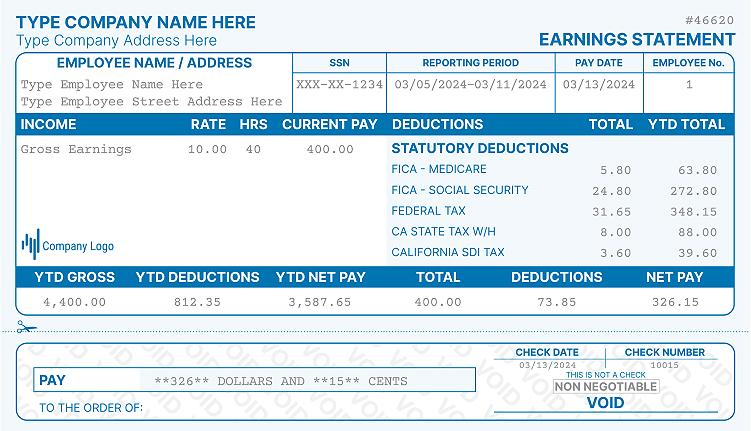
If you want to keep payroll records tight so your labor costs are always accurate when you build these reports, a pay stub generator like Real Check Stubs makes it easy to document employee payments in minutes.
Which One Matters More?
It depends on who's looking and what they need.
Applying for a loan? The balance sheet matters more. Banks want to see that you own enough to back the loan. They look at your assets, total debt, and whether you have property they could claim if things go wrong.
Talking to investors? The income statement matters more. Investors want to see if the business is making money. They want growing revenue, healthy margins, and a clear path to bigger profits. They use it to judge where things are headed.
Running the business day to day? You need both. The income statement shows if your operations are working. The balance sheet shows if you're building something solid underneath. Great sales don't help if you're buried in debt. And zero debt doesn't help if revenue is going backward.
Bottom line:
Don't pick one over the other. The real value comes from reading them together, alongside your cash flow statement. That's how you spot trouble early and make smart calls about hiring, spending, borrowing, and growing.
Frequently Asked Questions
What goes on a balance sheet vs. an income statement?
The balance sheet lists assets (cash, accounts receivable, inventory, equipment), liabilities (accounts payable, loans, taxes due), and equity (owner investment plus retained earnings). The income statement lists revenue, cost of goods sold, operating expenses, and the resulting net income or loss.
Which financial statement should I prepare first?
Start with the income statement. Its net income flows into retained earnings on the balance sheet, so you can't finalize the balance sheet until the income statement is done. After both, prepare the cash flow statement.
Can a company be profitable but have a weak balance sheet?
Yes. A company can show strong net income while also carrying heavy debt, holding little cash, or waiting on slow-paying customers. This is common with fast-growing businesses that borrow heavily to fund expansion.
What is the difference between a balance sheet and a profit and loss statement?
A profit and loss statement is just another name for an income statement. They're the same document. The balance sheet shows your financial position on a single date, while the P&L shows whether you made or lost money over a period of time. Learn more about earnings calculations like EBITDA here.
How often should small businesses review their financial statements?
Review your income statement monthly to catch expense problems early. Check the balance sheet quarterly or before any major financial decision, like taking on a loan or bringing in a partner.
What are the three main financial statements?
The income statement (shows profitability), the balance sheet (shows financial position), and the cash flow statement (shows how cash moves in and out). Together they give you the full picture of a business's financial health. Public companies are required by the SEC to publish all three.
Track Your Business Finances With Confidence
Whether you're preparing financial statements for a lender or just trying to get a handle on where your money goes, it starts with clean records. Use our paystub generator to create professional pay stubs for your employees in minutes so your labor costs are always accurate and ready for your income statement.
Sources